Key Technical Points
Direct-to-Fabric Architecture: Eliminates the two-step cycle (creating motifs on adhesive paper
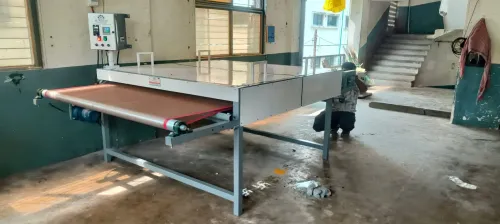
$\to$ manual heat pressing) by integrating layout and bonding into a single pass. Integrated Fusing Zone: Combines pattern brushing/dispensing with an inline heated roller or continuous fusing unit.
Multi-Color / Multi-Size Dispensers: Equipped with interchangeable vibrating plates or rotary stencil drums that feed different stone sizes (e.g., SS6 to SS30) and colors in one sequence.
Roll-to-Roll & Cut-Piece Capability: Available both as wide-format roll-to-roll continuous feeders (ideal for sarees, dupattas, and yardage) and flatbed units for cut panels.
Automated Web Tracking: Employs optical sensors and serpentine belt-correction mechanisms to keep continuous fabrics from drifting under tension.
Core Advantages
Significant Consumable Savings: Traditional rhinestone application consumes large volumes of single-use silicone transfer paper and sticky carrier films. Going paperless removes this recurring consumable cost entirely.
Reduced Labor Costs: Replaces multiple manual operators—brushing stones into acrylic templates, taping them, and carrying sheets to clamshell heat presses—with a single automated machine line.
High Production Speed: Delivers continuous operating throughput of 8 to 15 meters per minute on roll-to-roll systems, drastically outpacing batch heat press methods.
Consistent Adhesion & Quality: Controlled mechanical pressure rollers and digital PID temperature regulation ensure uniform glue melting, preventing stone detachment or uneven wash-fastness across large fabric areas.
Reduced Plastic & Paper Waste: Eliminates backing paper and carrier tape disposal, making the production floor cleaner and more sustainable.
How the Machine Works
The paperless transfer process merges stone positioning and thermal bonding into an uninterrupted, synchronized line: