www.sunriseinds.in
In
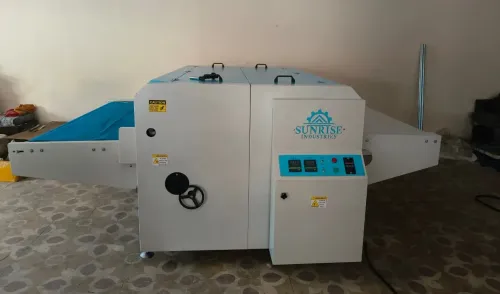
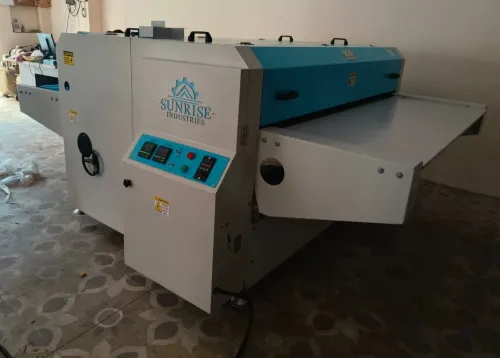
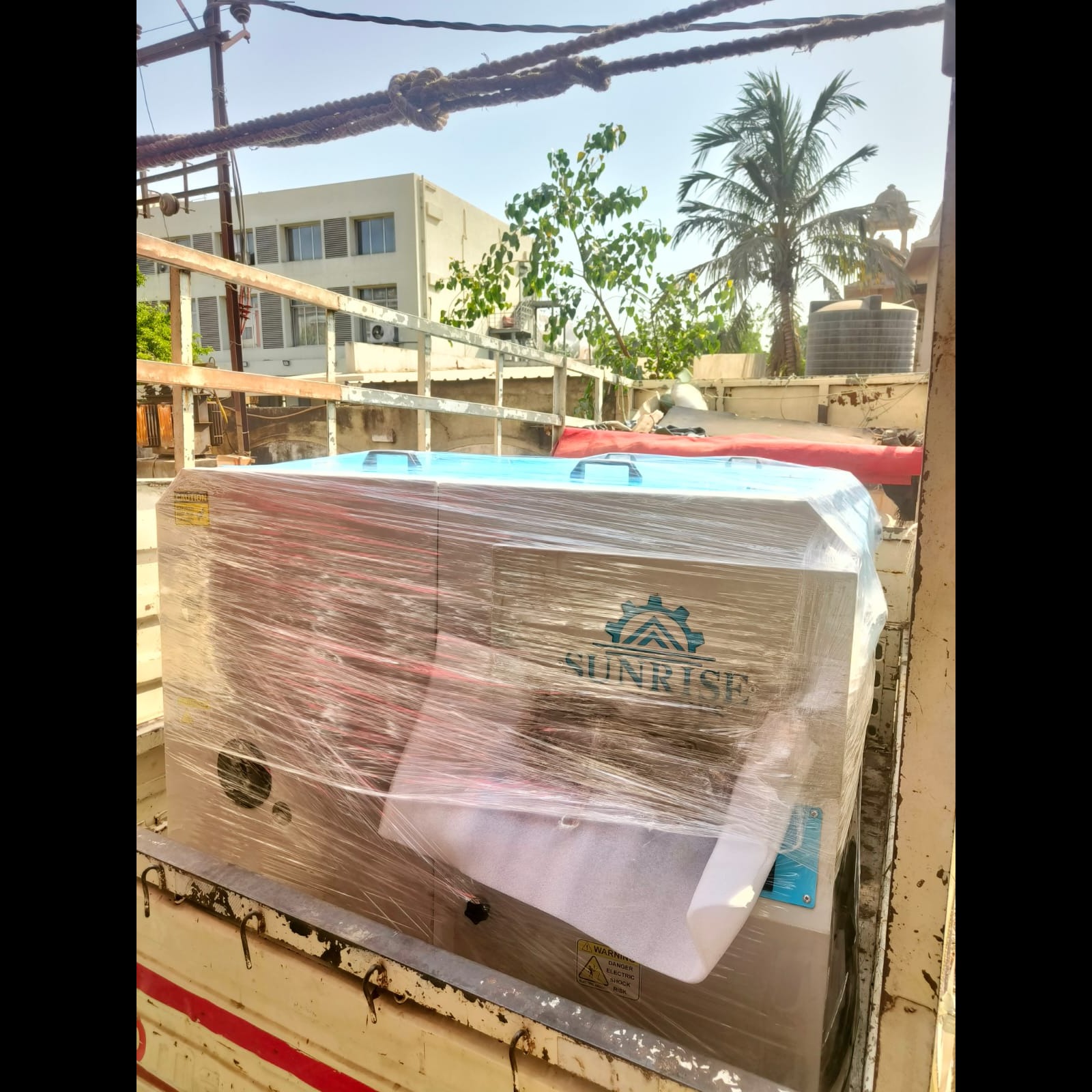
high-volume garment manufacturing, a 9-heater fabric fusing machine
represents an advanced multi-zone heating system designed for high efficiency,
speed, and precision. Instead of relying on one or two large heating plates, it
distributes heat across nine individual heating elements along the
conveyor tunnel.
This
configuration offers significant advantages for industrial production,
particularly when handling demanding workloads or wide fabric widths.
1.
Gradual Temperature Zones (Pre-Heating & Post-Heating)
One
of the biggest risks in fabric fusing is thermal shock, which can cause
delicate or synthetic fabrics to shrink, warp, or change color if exposed to
intense heat instantly.
- The 9-Heater
Advantage:
It allows the machine to create a precise temperature gradient. The first
few heaters gently pre-heat the fabric and interlining, the middle
heaters bring the adhesive to its exact melting point, and the
final heaters stabilize the bond before the fabric hits the
pressure rollers.
2.
Flawless Heat Distribution on Wide Widths
In
wide-format machines (such as 1600mm systems), keeping the temperature
perfectly uniform from the far-left edge to the far-right edge of the conveyor
belt is a major engineering challenge.
- The 9-Heater
Advantage:
By arranging nine smaller, strategically positioned heating units across
the upper and lower chambers, the machine eliminates "cold
spots." Whether a garment component is placed in the center or on the
very edge of the belt, it receives the exact same temperature, preventing
uneven bonding or peeling (delamination).
3.
High-Speed Continuous Production
On
standard machines, if you run the conveyor belt too fast, the fabric passes
through the heating zone before the glue has time to melt properly.
- The 9-Heater
Advantage:
Because the heating zone is physically longer and populated by nine
heaters, the fabric spends more time exposed to consistent heat even at higher
belt speeds. This drastically increases daily production output
without sacrificing quality.
4.
Exceptional Energy Efficiency & Dual-Surface Heating
- Top & Bottom
Uniformity:
A 9-heater matrix typically distributes elements on both the top and
bottom of the conveyor path. This ensures that heat penetrates thick,
heavy fabrics (like wool coats or heavy denim) and multi-layered
interlinings evenly from both sides.
- Smart Power
Consumption:
Smaller, individual heaters heat up faster and lose less ambient energy
than one massive heating block. Many modern 9-heater machines feature
independent zone control, allowing you to turn off or lower specific
elements if you are running narrower or lighter fabrics, saving
electricity.