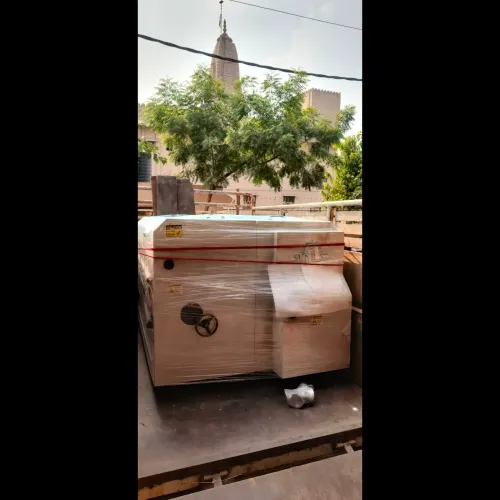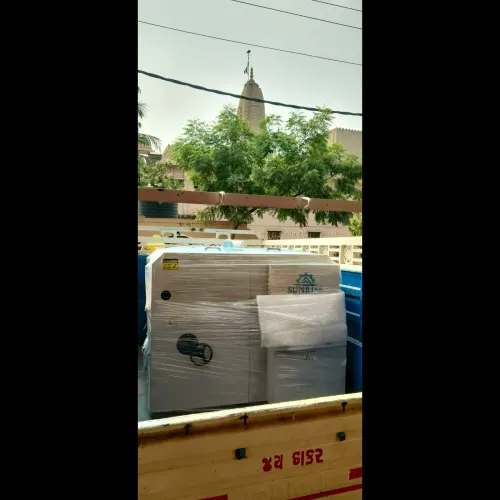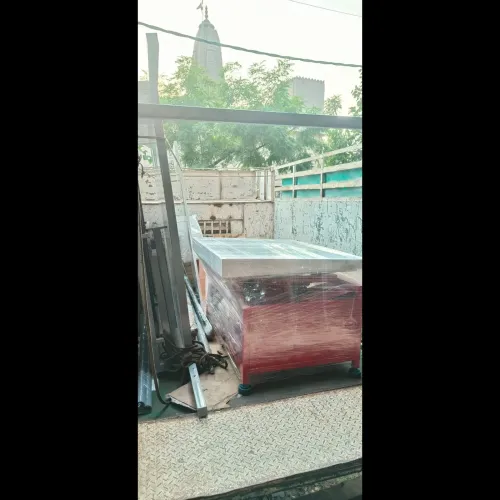
How It Works
Feeding: Fabric and the transfer medium (sublimation paper, DTF film, foil, or fusible interlining) are fed together onto a conveyor belt or heat platen.
Thermal Activation & Pressure: As the layers pass through the heating zone, temperature-controlled heaters melt the adhesive resin or turn dye sublimation inks into gas, while pneumatic or roller pressure forces the pigment/adhesive deep into the fabric fibers.
Cooling & Output: The bonded material exits the heating chamber, cooling rapidly to set the transfer with a permanent, wash-resistant finish.
Primary Applications
Dye Sublimation Transfer: Transfers full-color digital graphics from printed transfer paper onto polyester sportswear, flags, banners, and home textiles.
DTF (Direct-to-Film) & Vinyl Transfer: Fuses pre-printed DTF films, heat transfer vinyl (HTV), and plastisol transfers onto cotton, blends, and leather.
Metallic Foil & Flock Stamping: Bonds reflective, holographic, metallic foils, and velvet flocking paper onto apparel and ethnic wear.
Garment Interlining Fusing: Doubles as a standard fusing machine to fuse woven and non-woven interlinings into collars, cuffs, and plackets.
Rhinestone & Motif Fixing: Permanently secures hotfix stones, sequins, and silicone badges to cut panels or finished garments.
Key Types of Machines
| Machine Type | Best Suited For | Key Advantage |
| Continuous Belt Fusing Machine | High-volume production, cut garment panels, long ribbons | Non-stop feeding, fast cycle times, consistent pressure |
| Rotary Calender / Roll-to-Roll | Continuous fabric rolls, all-over sublimation printing | Handles continuous yardage without misalignment |
| Flatbed Heat Press (Pneumatic/Manual) | T-shirts, hoodies, bags, localized chest prints | High clamping pressure, ideal for thick or uneven items |