Key
Elements of a Fusing Machine
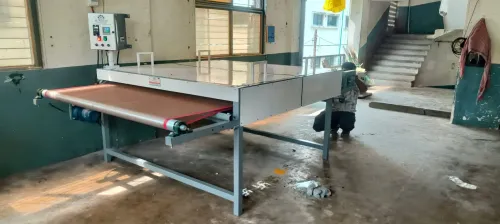
- Heating System: Uses upper and
lower heaters to melt the interlining adhesive. Requires precision control
(Contactor) to maintain a consistent temperature across the belt.
- Pressure Rollers: Applies uniform
force to bond the melted resin into the fabric fibers. Usually spring-loaded
for adjustable intensity.
- Conveyor Belt: High-grade Teflon-coated
seamless belts that transport fabric. The non-stick surface prevents glue
buildup.
- Time (Speed)
Control:
An inverter motor regulates how long the fabric stays in the heating zone
(dwell time), ensuring a perfect bond without scorching.
- Auto-Belt
Alignment:
Sensors and cylinders that keep the wide belt (like your 1600mm model)
centered to prevent edge damage.
- Cooling System: Exit-point fans or
rollers that quickly lower the fabric temperature to "set" the
bond instantly.
- Cleaning Device: Scrapers and
brushes that continuously remove glue residue and lint from the belt
during operation.
- Safety Features: Finger guards to
protect operators from high heat and crushing hazards.
1.
Key Functions of a Fabric Fusing Machine
The
machine automates and standardizes the process of sticking fusible interlining
(a fabric coated with heat-activated adhesive on one side) to garment
components. It achieves this through three precise variables:
- Controlled Heating: It melts the
resin/adhesive on the interlining uniformly without scorching or damaging
the face fabric.
- Even Pressure
Application:
Utilizing continuous rollers or pneumatic presses, it forces the liquefied
adhesive into the fibres of the base fabric, ensuring a permanent or
highly durable bond.
- Speed and Cooling
Control:
In continuous conveyor models, it regulates how long the fabric is exposed
to heat and often includes a cooling zone to solidify the bond
immediately, preventing shrinkage or warping.
2.
Primary Applications in Garment Manufacturing
Fusing
is used to give garments structure, stability, and support in specific areas
that need to hold their shape or withstand wear and tear.
Structural
Reinforcement
- Collars and Cuffs: Used extensively
in formal shirts and jackets to keep collars stiff and cuffs crisp,
preventing them from sagging or wrinkling after washing.
- Coat and Blazer
Fronts:
In tailored menswear and womenswear, full or partial front fusing gives
the chest and jacket body a smooth, structured, and premium look.
- Waistbands: Applied to
trousers, skirts, and jeans to give the waistband stability so it doesn't
stretch out of shape during wear.
Detail
and Aesthetic Enhancement
- Plackets and Button
Bands:
Reinforces the strips of fabric where buttons and buttonholes are placed,
preventing the fabric from tearing or puckering under tension.
- Pocket Flaps and
Facings:
Keeps edges sharp, flat, and perfectly aligned with the rest of the
garment.
- Embroidered Areas: Often used to
stabilize delicate or stretchy fabrics before heavy embroidery or
rhinestone application is done, preventing the fabric from puckering.